SkinPen Microneedling in Brickell, Miami
Searching for microneedling near me in Miami? SkinPen is the first FDA-cleared microneedling device — it restores your skin’s youthful glow by harnessing your body’s natural healing process for collagen renewal and skin rejuvenation. Our Brickell clinic offers microneedling in Miami for acne scars, fine lines, and uneven texture, with minimal downtime — performed by licensed medical providers.
Medically reviewed by Mariana Tolosa, PA-C1501 South Miami Avenue #201, Brickell
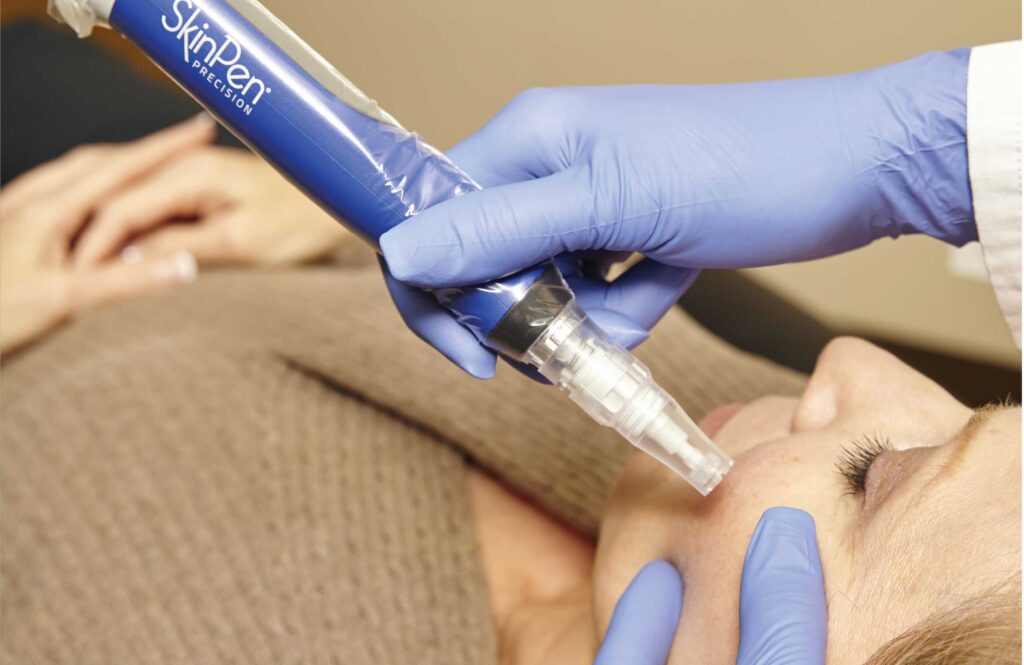
What SkinPen does for acne scars, texture and neck lines
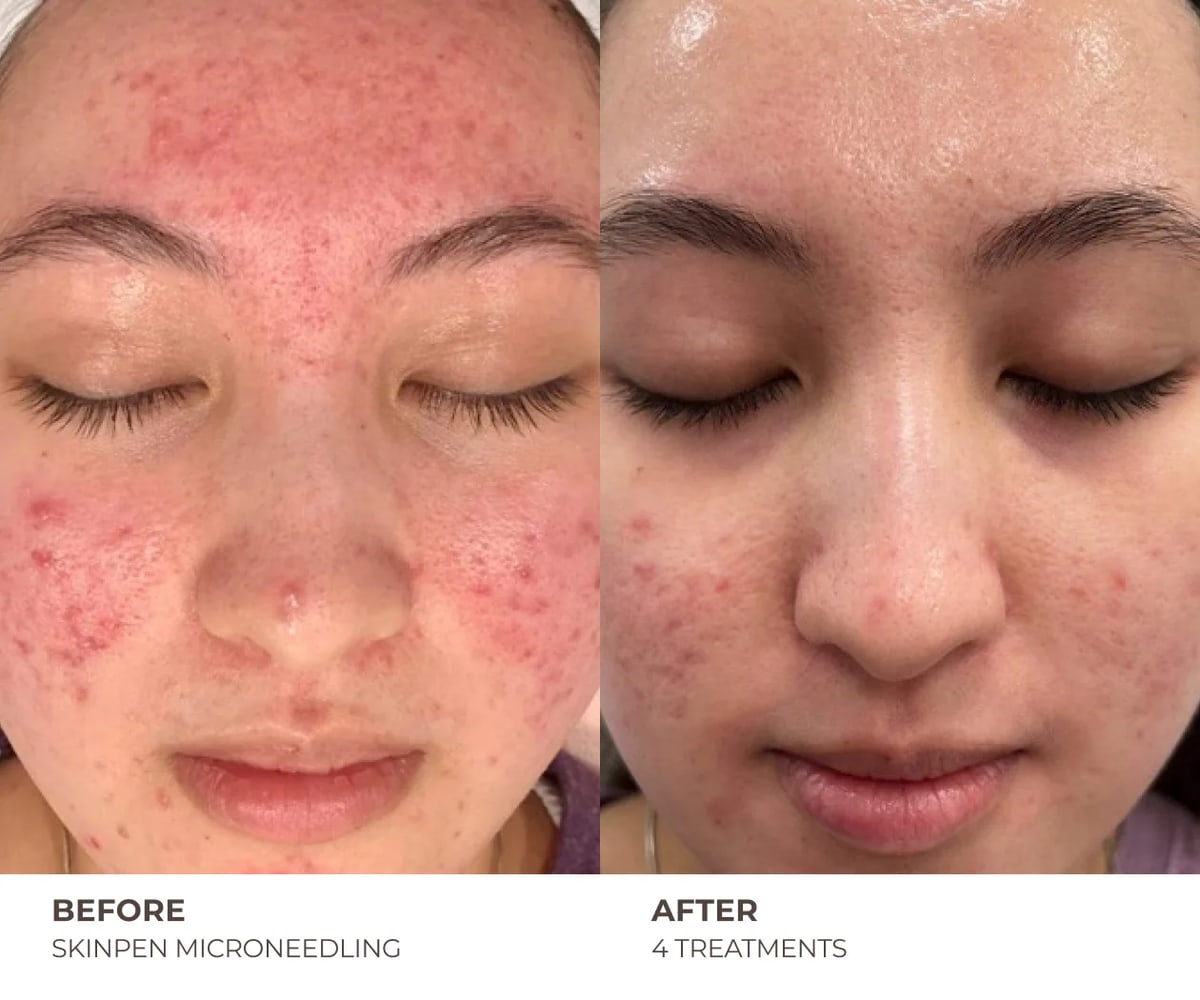
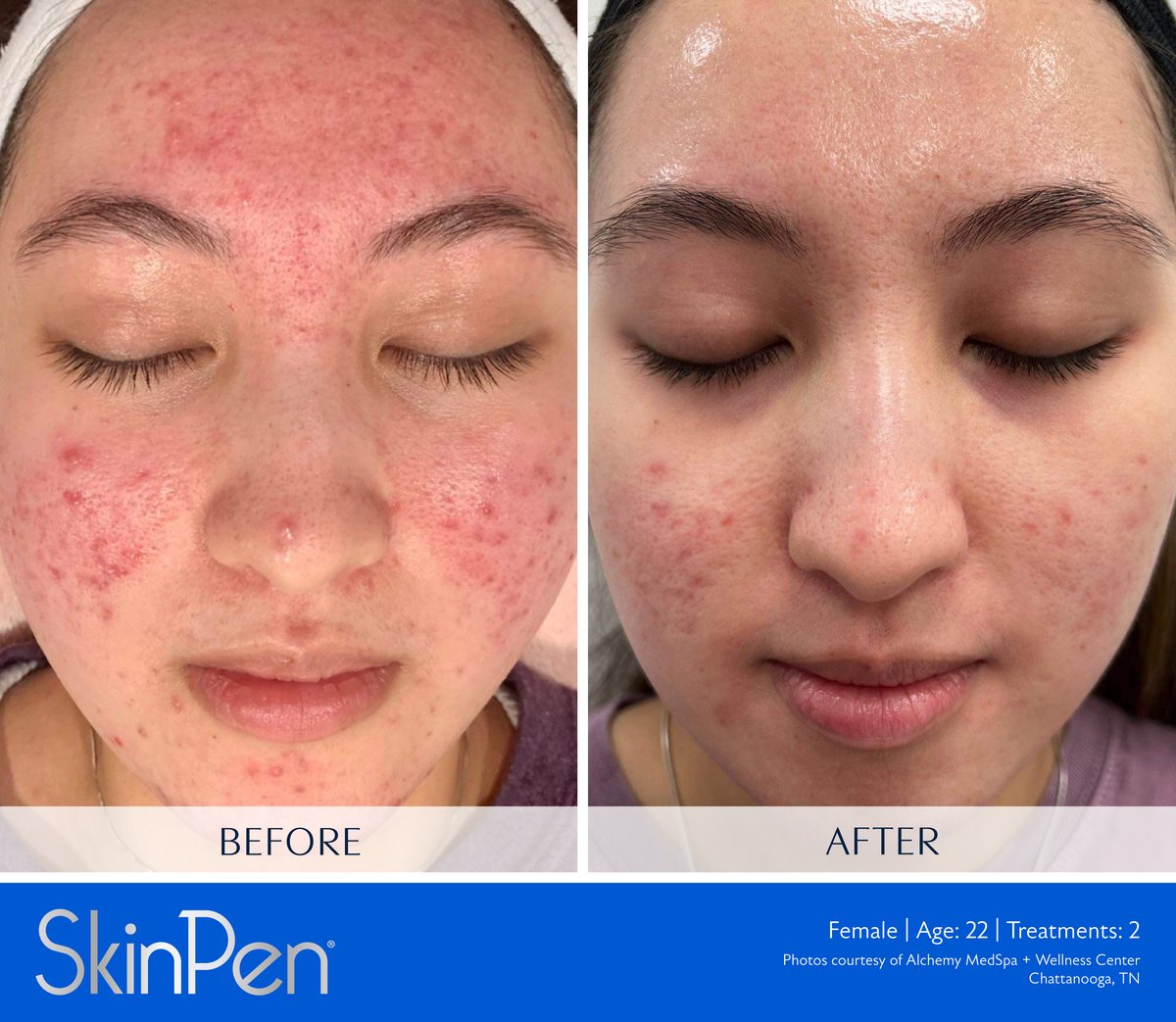
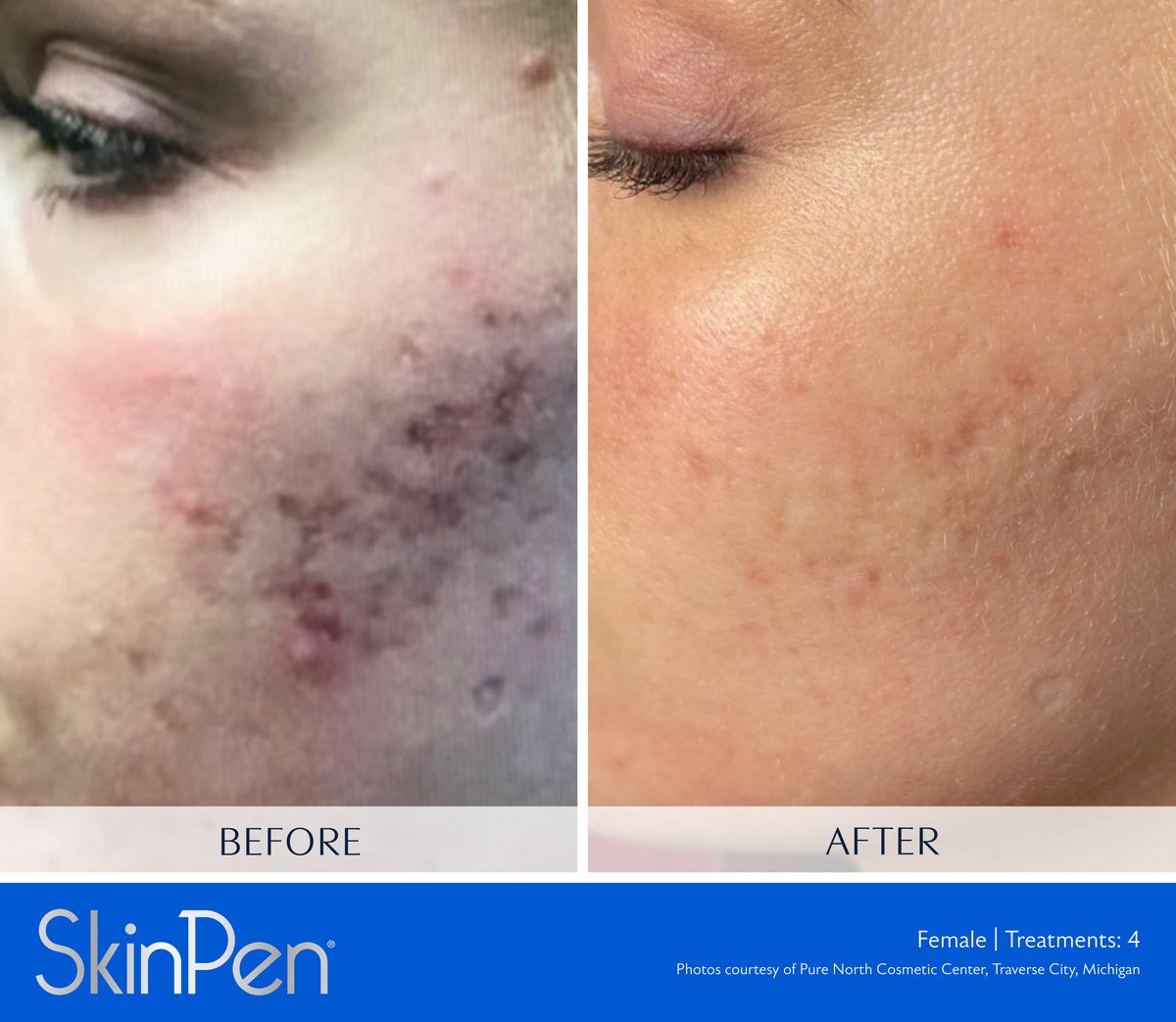
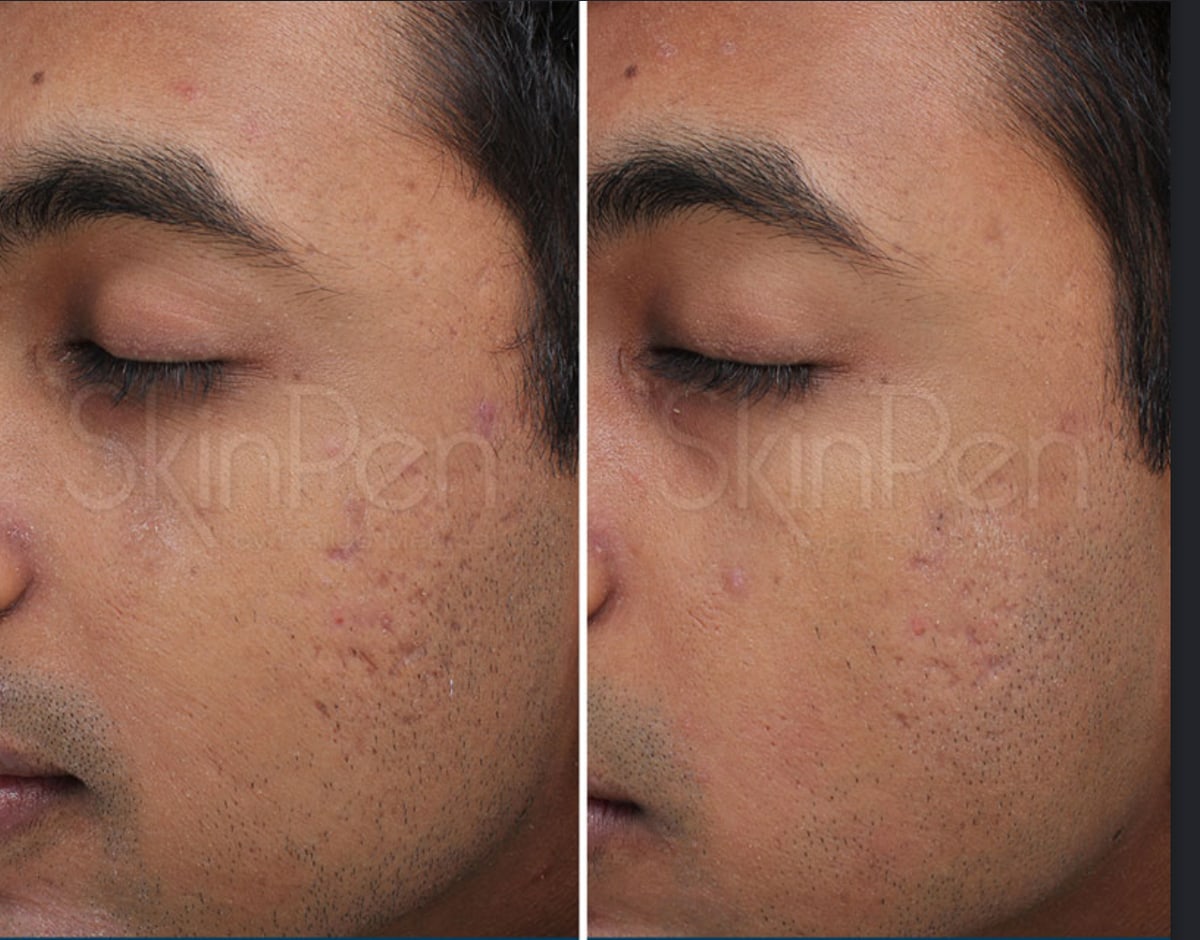
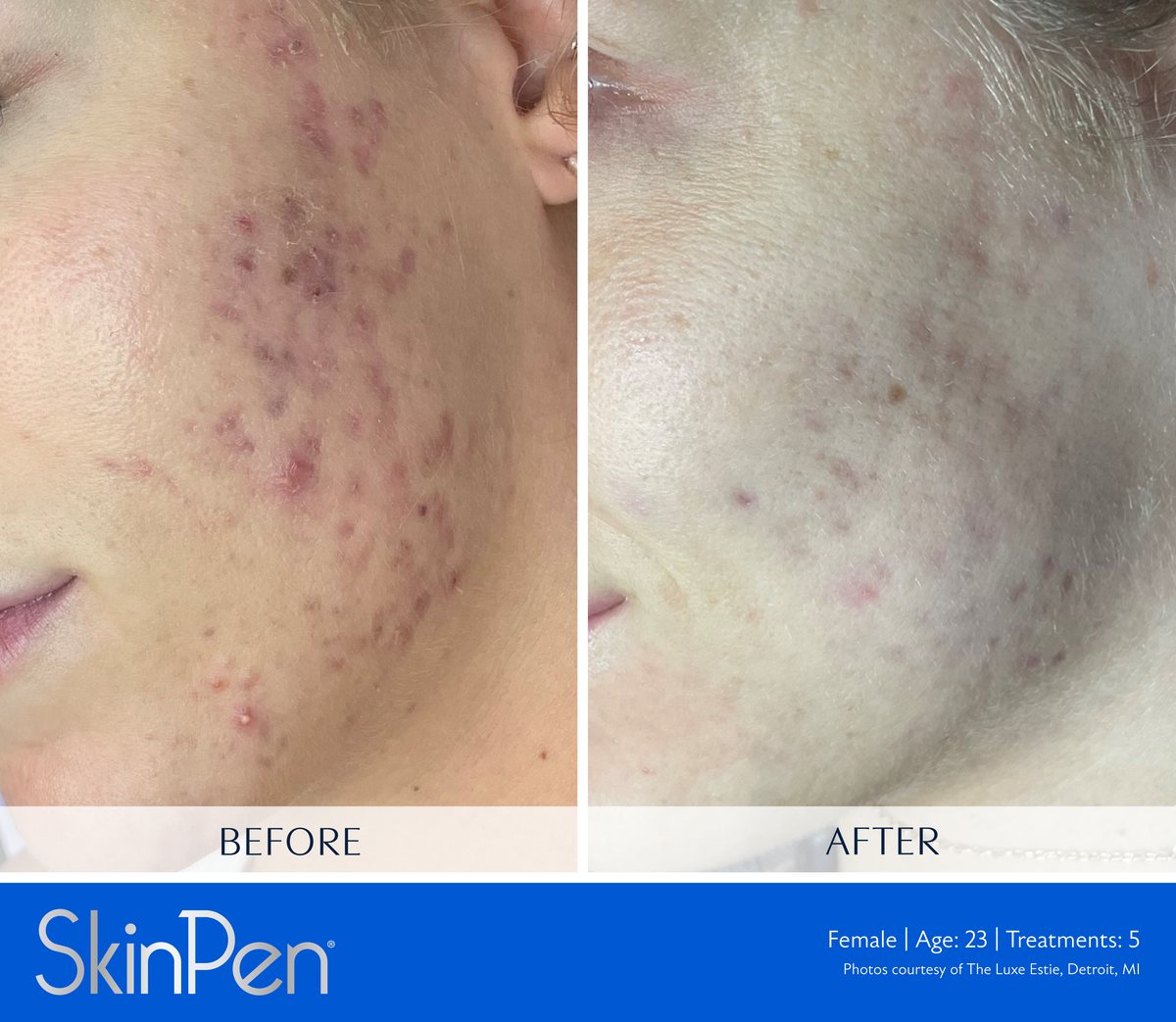
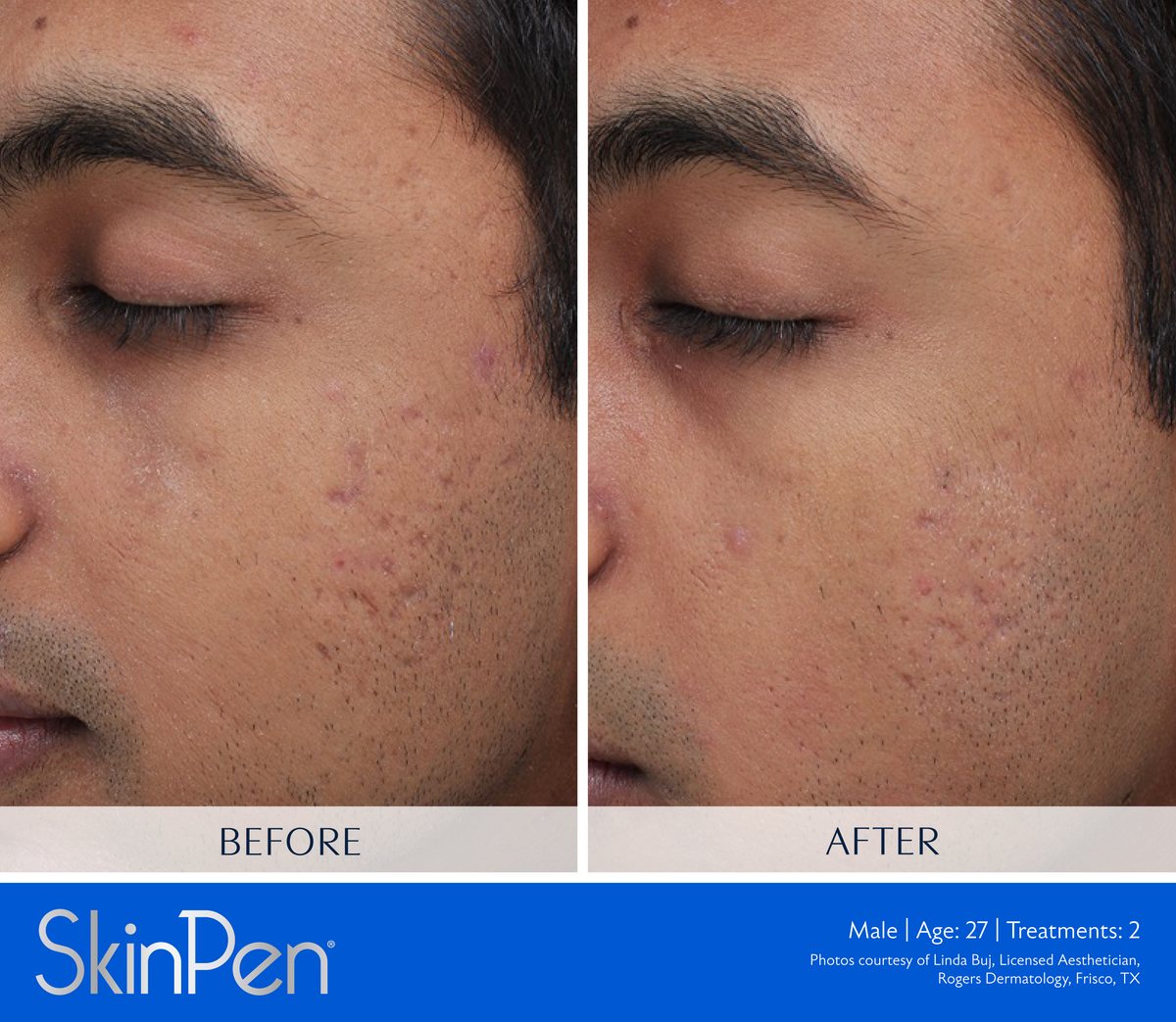
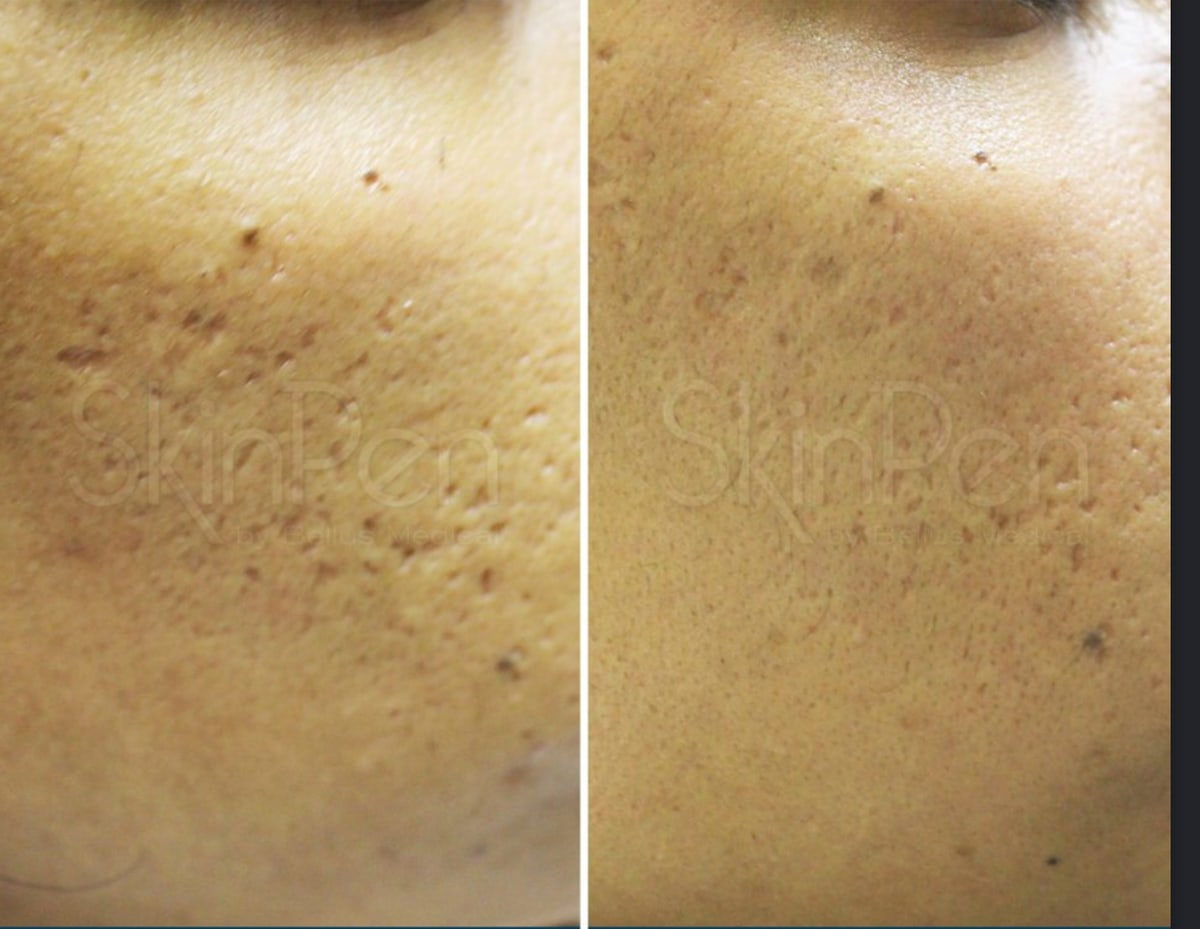
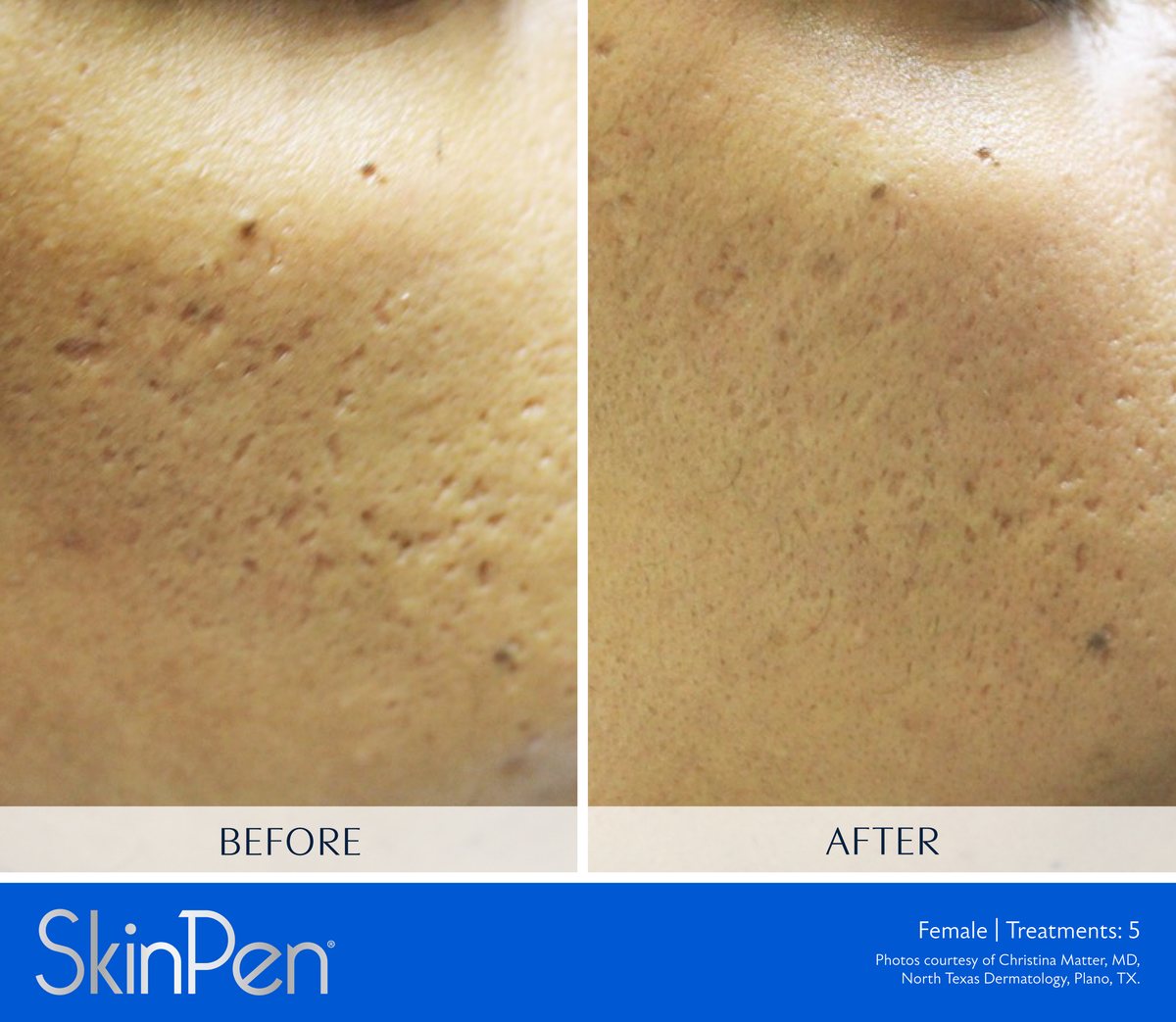
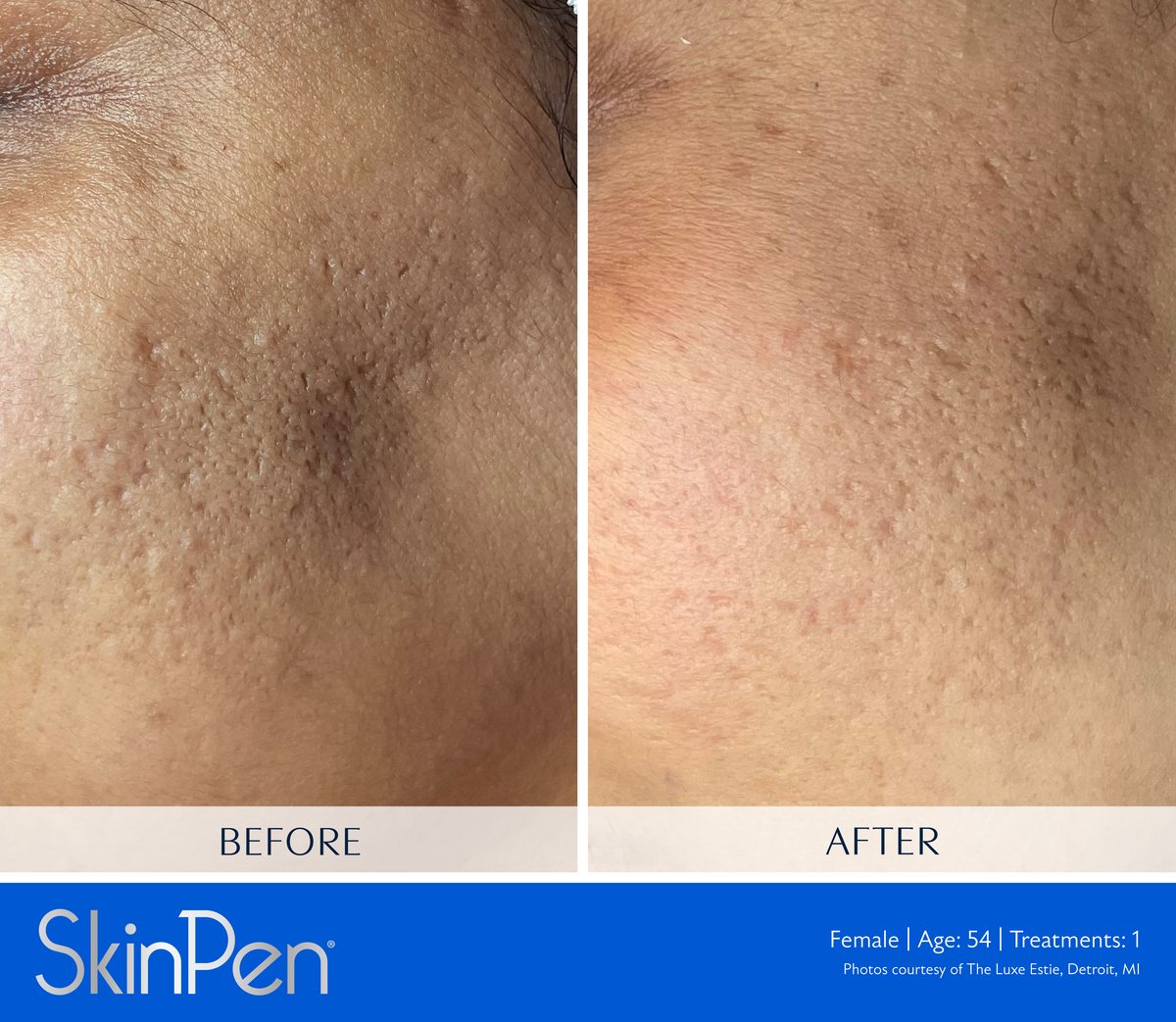
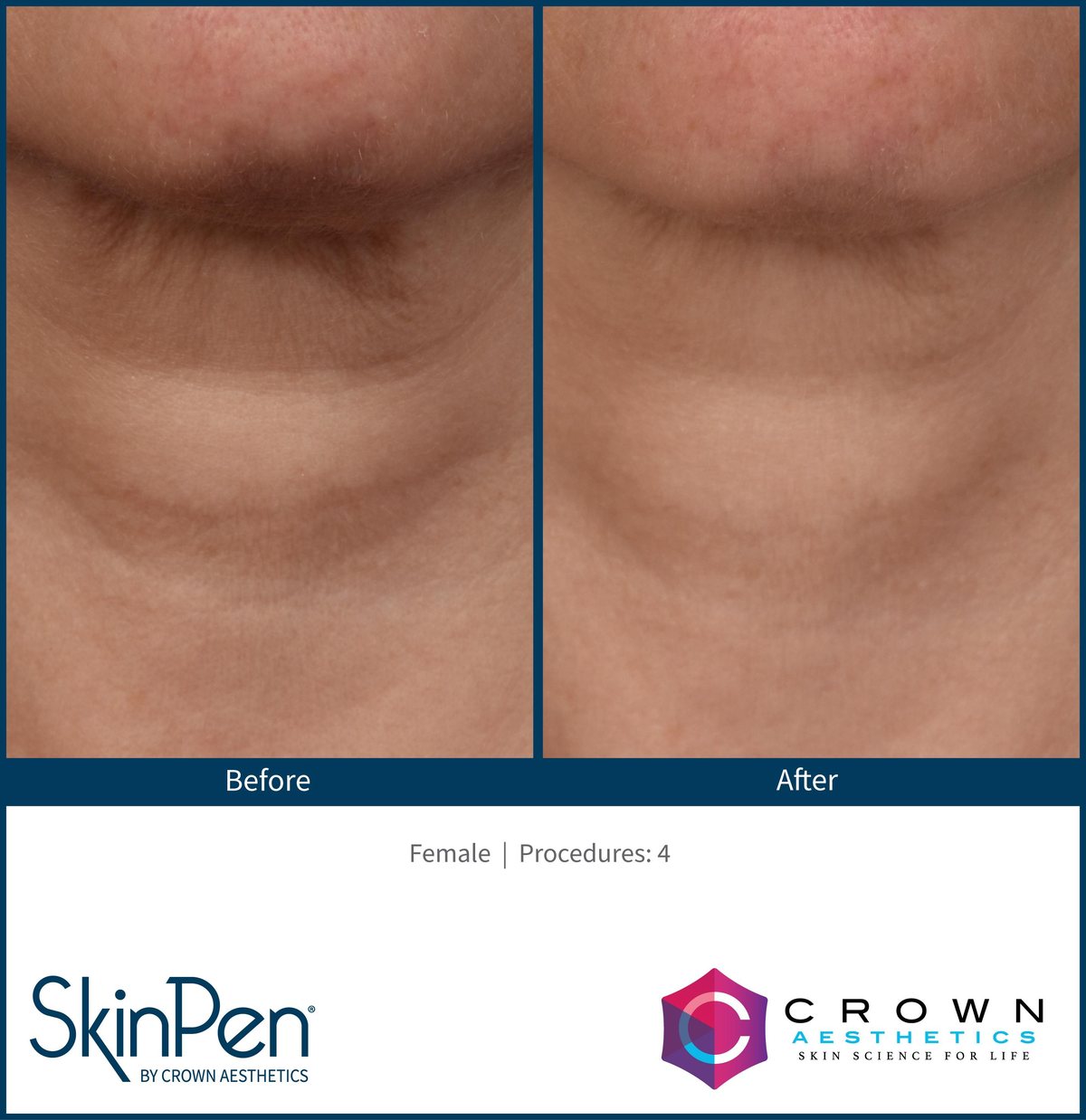
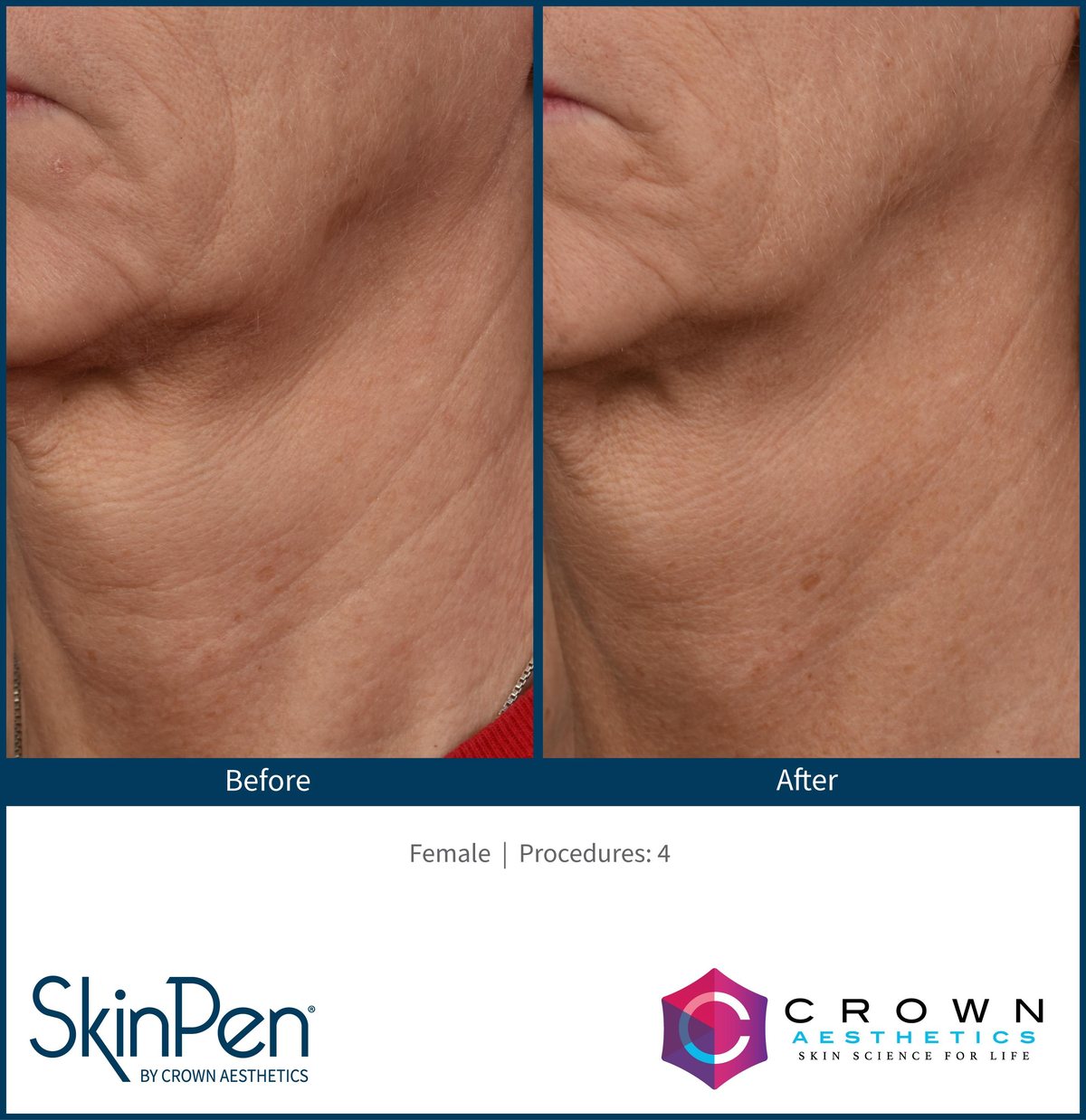
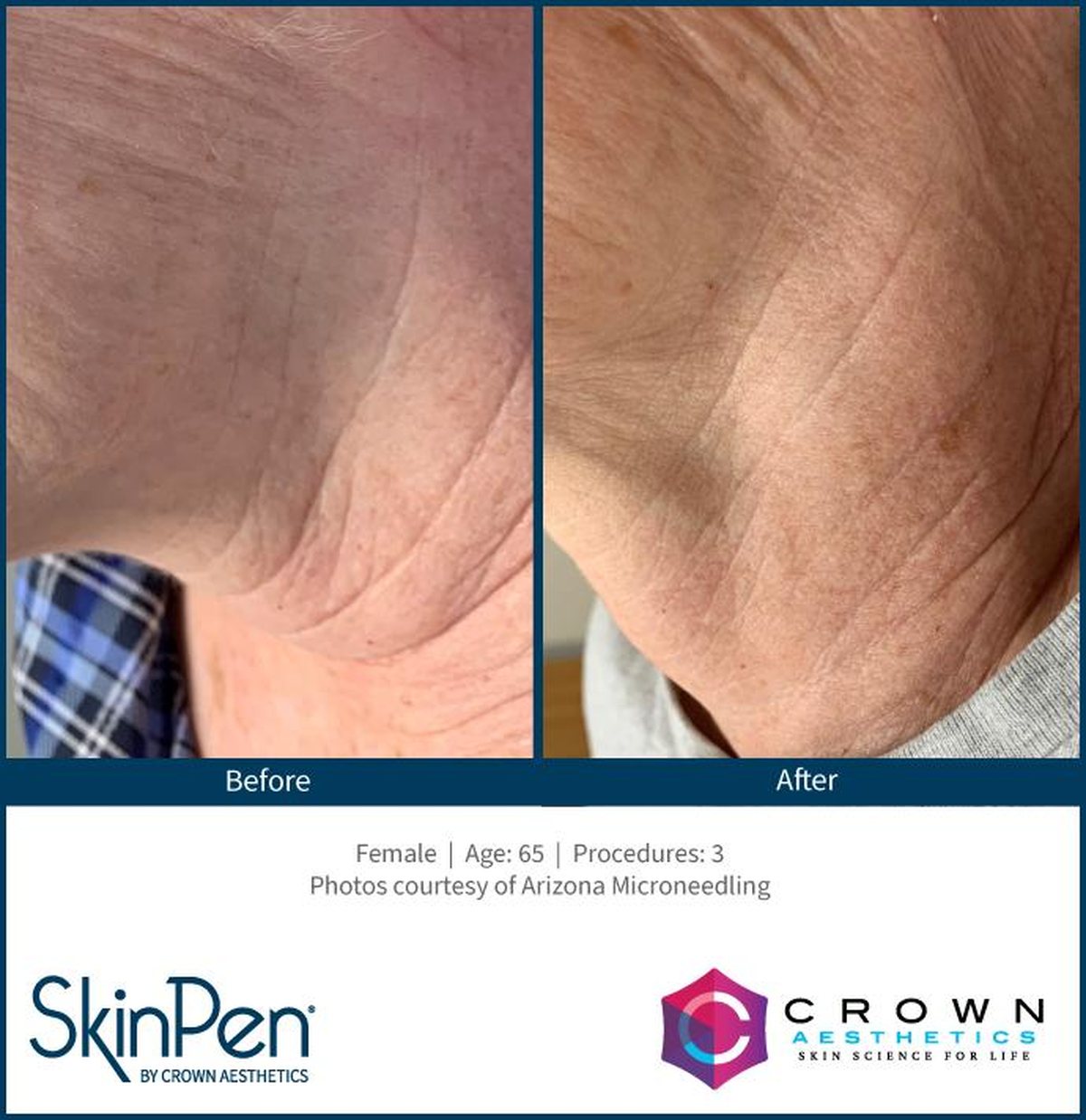
Clinical photos from SkinPen showing what a series looks like on acne scarring, texture, and post-acne redness — and on the neck, the second indication SkinPen is FDA-cleared for.
Acne scars, breakouts & post-acne redness
Most plans run 3 to 6 sessions, 4 to 6 weeks apart, with depth set for your skin type.
Texture, pores & tone
Shallow scarring, rough patches and enlarged pores respond to the same collagen renewal. Change is gradual: new collagen keeps building for weeks after each session.
Neck lines & crepey skin
SkinPen is FDA-cleared to improve the appearance of neck wrinkles in Fitzpatrick types II–IV, and the neck protocol runs four sessions rather than three. The neck thins earlier than the face and is one of the hardest areas to treat without heat.
SkinPen microneedling at Miami Skin Spa
A full session with one of our providers, filmed in our Brickell treatment room. Individual results vary — browse treated cases in our results gallery.
What a SkinPen session looks like
Everything you’d ask at the consult
Collagen induction therapy, beneath the surface
SkinPen microneedling — also known as collagen induction therapy — creates controlled micro-wounds that trigger your body’s natural healing response. As the skin repairs itself, it produces new tissue rich in collagen and elastin, the proteins responsible for tightness and elasticity — a natural, holistic healing of the skin from the inside out. For the full evidence on resurfacing options, see our skin resurfacing guide.
Why collagen renewal matters as we age
Each year after you turn 20, collagen production drops by roughly 1% — which is why skin gradually appears looser and saggier with age. By restarting collagen production, microneedling helps counter the visible effects of aging: firmer skin, more even texture.
- Natural collagen renewal — your own healing response builds the result.
- Controlled, consistent depth — a precise micro-injury pattern across the treatment area.
- Minimally invasive — no surgery, no removal of the outer skin layers, minimal downtime.
The three phases, and how long they take
Healing runs in three stages, and they are nowhere near the same length. Inflammation is the first day or two — that’s the redness. Proliferation runs through roughly the first week to ten days, laying down new tissue. Remodeling is the long one: collagen keeps reorganizing and strengthening for six months to a year after a single session.9 That’s why sessions are spaced out instead of stacked, and why your last appointment isn’t the last of the improvement.
Acne scars, scar removal & texture
Acne scars are one of the most common reasons clients book SkinPen at Miami Skin Spa. By rebuilding collagen inside scarred tissue, it visibly softens acne scars and uneven texture over a series of sessions — if you’re searching for scar removal, medical-grade microneedling is a well-studied non-surgical starting point.
Fine lines, wrinkles & firmness
The same collagen renewal reduces the appearance of fine lines and wrinkles and helps tighten loose and saggy skin — and it’s well worth considering before committing to surgical anti-aging procedures.
Neck lines & crepey skin
The neck is the second area SkinPen is FDA-cleared for — specifically, the appearance of neck wrinkles in Fitzpatrick skin types II–IV. Neck skin is thinner than facial skin and shows collagen loss earlier, which is why it often looks a decade ahead of the face. The neck protocol runs four sessions rather than three, spaced about a month apart. If the concern is loose skin rather than surface crepiness, skin tightening and Morpheus8 reach deeper.
Pores, tone & stretch marks
Microneedling treatments also refine large pores, even skin tone for a brighter, glowing complexion, reduce the appearance of stretch marks, and support overall skin rejuvenation. Because discoloration often accompanies scarring, we sometimes pair SkinPen with treatments targeting hyperpigmentation.
SkinPen suits those who haven’t had success with at-home rollers and topical treatments. Many skin concerns can be visibly improved in just a few sessions — and in experienced medical hands, the results build over the series.
How many sessions you’ll need
This isn’t a one-and-done treatment — microneedling requires multiple sessions for full results. Most patients benefit from 3–6 sessions spaced 4–6 weeks apart; very minor concerns may need only one or two treatments. Deeper scarring sits at the longer end of the range.
How long a session takes
The needling itself is quick. SkinPen’s own treatment guidance puts a full face at around 20 minutes and a face-and-neck treatment at under 30.9 Budget an hour for the appointment, though — the numbing agent needs 30–45 min to take effect before anything starts.
When results appear
Results begin immediately: the skin starts healing right after treatment and continues remodeling for 4–6 weeks, when the next session is scheduled. Visible improvements are often noticed after just one treatment, with full results developing over several weeks as collagen rebuilds — and the remodeling underneath keeps going for six months to a year after your final session.9 We recommend upkeep sessions every 6 or 12 months to keep collagen production ahead of the aging curve.
Maintaining your results
You can pair SkinPen with complementary treatments like HydraFacials and Pico Genesis to maintain and amplify results between sessions — your provider sequences these at the consultation.
What the acne-scar study found
SkinPen’s FDA clearance rests on a study of 20 patients who had three sessions a month apart and were followed for six months after the last one. Two board-certified dermatologists graded the photos blinded — they didn’t know which image came first. At six months, 55% of patients showed a measurable improvement in scar grade and none scored worse than they started. Asked about their own skin, 90% reported some degree of improvement in the appearance of their acne scars.8
What the neck study found
A separate study covered the neck: 35 patients aged 44 to 65, Fitzpatrick types II–IV, four sessions a month apart, assessed three months after the final treatment. Two independent blinded physicians graded neck wrinkles on the Lemperle scale, and 50% improved by at least one full grade.8
What recovery actually looked like
Neither study recorded an adverse event at the final follow-up. What patients did log in their daily diaries were short-lived treatment responses: redness, itching, peeling and tenderness in about a third of the acne group lasting one to three days; dryness in 12–22% lasting one to six days; briefer episodes of tightness and burning. That’s the recovery to plan around — a few days, not a few weeks.8
Numbers from a controlled study are not a promise about your skin. Scar type, how long you’ve had them, your age and your healing all move the result, which is why we map them at the consultation before quoting a series.
The original microneedling
Plain collagen induction therapy: tiny sterile needles puncture the skin, which can cause minor pinpoint bleeding. SkinPen Precision — made by Crown Aesthetics (formerly Bellus Medical) — is the FDA-cleared evolution of this category. Compared with Dermapen-style pens and other microneedling devices, it pairs precise, controlled treatment depth with FDA clearance supported by clinical safety and efficacy data.
Microneedling + radio frequency
A newer category adds tiny bursts of radiofrequency energy down the needles as they penetrate the skin, making skin tightening more efficient for deeper laxity or scarring. For deeper remodeling, ask our team about Morpheus8.
Radio frequency microneedling + fractional CO2
A combination of two treatments — fractional CO2 resurfacing layered with RF microneedling. It’s one of the more aggressive options on the market, with considerable downtime; the fractional CO2 improves skin resurfacing from the epidermis down to the deeper layers. If a gentler protocol gets you the same result with less recovery, your provider will say so at the consultation.
Why acne scars form
More than 90% of people across the globe will experience acne at some point. An acne scar is the leftover evidence of the body’s healing process: pores clog with bacteria and oil, inflammation follows, and the new collagen fibers the body produces don’t look exactly like the original skin. Whether you scar depends on the type of acne (severe cystic acne commonly scars), how long you had it, genetics, and habits like picking or popping pimples. The right treatment starts with the right diagnosis — our acne scars guide covers the full evidence.
Atrophic scars: rolling, icepick & boxcar
Atrophic scars — the most common type — form below the top layer of the skin when collagen is lost during healing, leaving shallow depressions or craters. Rolling scars look like waves, formed when bands of protein tether the epidermis down to the subcutaneous tissue; icepick scars are deep, narrow, V-shaped holes (like a chicken pox scar) and the most difficult acne scars to treat; boxcar scars are wider with well-defined, boxy edges — often described as “pitted skin.”
Hypertrophic & keloid scars
These form above the skin from too much collagen. Hypertrophic scars feel raised and look pink or red; keloids can grow beyond the borders of the original injury, often run in families, and are more common in deeply pigmented skin. They respond to different tools — massage, steroid injections (corticosteroids), and cryotherapy with liquid nitrogen.
Where SkinPen fits in the treatment plan
Rolling and boxcar scars often respond well to microneedling’s collagen renewal inside the scar. Depending on scar type, your plan may also include lightening creams for discoloration, subcision, excision, microdermabrasion, laser therapy, chemical peels, or dermal fillers for stubborn icepick scars. While icepick scars may never disappear completely, a layered plan can reduce their appearance substantially — SkinPen is one component, often combined with other modalities. Restoring tone and vibrancy comes last, with peels and facials like the HydraFacial.
Used across a wide range of skin tones
Because SkinPen relies on your skin’s own healing response rather than heat or pigment-targeting energy, it is used across a wide range of skin tones, including deeper complexions where some energy devices need caution. On deeper skin (Fitzpatrick IV to VI), pigment can darken before it lightens.9 That’s why your provider starts shallow and builds depth rather than going deep on the first pass.
Comfort during treatment
Microneedling is not a painless experience on its own, so we highly advise the topical numbing agent — it takes about 30–45 min to take effect, after which treatment is comfortable for most patients. Your skin will be irritated and red afterward; that’s the healing response at work.
Who’s a candidate
- Those with acne scars, fine lines, or wrinkles
- Anyone wanting to improve overall skin texture and tone
- People seeking non-invasive skin rejuvenation without surgery
- A wide range of skin tones, including deeper complexions — settings are matched to your skin at the consultation
What we screen for
Some of these rule treatment out; most simply move it, or change the plan. We go through them at the consultation rather than at the chair.
- Active acne flares, skin infections, cold-sore outbreaks, or open lesions in the treatment area — treatment is deferred until resolved.
- Recent isotretinoin use (Accutane), keloid-prone scarring, and conditions that impair wound healing — discussed individually.
- Pregnancy and nursing, and blood thinners or a bleeding disorder — reviewed at your consultation.
- An allergy to stainless steel or to topical anesthetics — the needles and the numbing agent both matter here.
- Skin cancer in the treatment area, raised moles, or scars and stretch marks less than a year old.
- Eczema, psoriasis, rosacea or another ongoing skin condition in the area, and conditions like diabetes or immunosuppressive therapy that change how skin heals.
Every SkinPen treatment at Miami Skin Spa is performed by a licensed medical provider after an individual evaluation — meet the team.
Before your session
- Stop retinoids 24 hours beforehand, and keep off the sun — no burns, no long exposure — for that same 24 hours.
- If you’ve taken oral isotretinoin (Accutane), the manufacturer asks for six months between your last dose and a microneedling treatment.8
- Tell us about any autoimmune therapy — there should be at least 24 hours between it and your session.
Right after your session
We apply a customized post-treatment serum and review a personalized aftercare plan built around your skin and goals. Expect mild redness and swelling similar to a light sunburn, subsiding within 24–48 hours — most patients resume normal activities right away.
The first week
- Keep the skin clean and skip makeup for the first day while the micro-channels close.
- Use a gentle cleanser and moisturizer; pause retinoids, acids, and exfoliants until the skin settles.
- Sunscreen goes back on at the 24-hour mark, not before — the micro-channels are still closing that first day. After that it’s daily broad-spectrum SPF; new collagen is building and the Miami sun is unforgiving.
- No sweaty workouts, saunas, or sun for a full 72 hours. Heat and sweat on skin that’s still healing is what turns ordinary redness into a real reaction.8
Between sessions
Medical-grade skincare keeps the collagen response on track, and gentle maintenance like a HydraFacial can be layered in once your skin settles.
Not sure SkinPen is the right tool? Bring your concern, not a treatment name. A consultation maps your skin and goals to the right plan — whether that’s SkinPen microneedling, a chemical peel, Morpheus8, or a combination.
SkinPen vs the alternatives
All of these renew the skin’s surface — the difference is mechanism, depth, and downtime. We offer every option below, so the recommendation is based on your skin, not the device we happen to own.
| Treatment | How it works | Best for | Downtime | Skin tones |
|---|---|---|---|---|
| SkinPen microneedling | Fine needles trigger your skin’s own collagen induction at the surface | Acne scars, fine lines, pores, texture, tone, maintenance | 24–48 hours | Wide range of skin tones |
| Morpheus8 | Adds radiofrequency energy through needles at adjustable depths | Deeper laxity, deeper acne scarring, jawline definition | 24–48 hours | Wide range of skin tones |
| Chemical peels | Acid solutions exfoliate the outer layers at controlled depths | Tone, pigment, acne maintenance, surface texture | None to several days | Peel-dependent |
| HydraFacial | Cleanses, extracts, and hydrates with no needles at all | Glow, congestion, hydration, between-series maintenance | None | Wide range of skin tones |
| Laser resurfacing | Light energy removes or heats the outer skin layers | Sun damage, pigment correction, deeper resurfacing | Several days+ | Caution in deeper tones |
Why our Brickell providers
Microneedling results depend on depth, pattern, and judgment in the room. Every SkinPen session here is performed by a licensed medical provider who offers microneedling services daily — not occasionally.
Mariana Tolosa, PA-C
Board-certified Physician Assistant specializing in advanced injectables, laser rejuvenation, and SkinPen microneedling with PRX skin rejuvenation. Mariana builds plans for acne, texture, and hyperpigmentation around long-term skin health — conservative protocols first.
Meet Mariana →Morgan Winters, FNP-C
Family Nurse Practitioner focused on facial rejuvenation, pairing SkinPen microneedling and collagen-stimulating treatments with medical-grade skincare. Morgan’s plans favor subtle, structural improvement — skin that looks healthier, not treated.
Meet Morgan →Meet the whole Miami Skin Spa team — and see the work in our results gallery.
Start from your concern
Each guide below covers the full evidence for that concern — what works, what doesn’t, and where SkinPen microneedling fits among the options.
Acne scars
Rolling, boxcar, and icepick scars respond differently — which types collagen induction handles best, and when to escalate.
Read the guide →Scar removal
Surgical, injury, and acne scars — how microneedling triggers the healing response that remodels scarred tissue.
Read the guide →Skin resurfacing
Microneedling, peels, and lasers compared — matching resurfacing depth to your texture concern and downtime budget.
Read the guide →Wrinkles & anti-aging
Where collagen renewal fits alongside relaxers and fillers in a long-term anti-aging plan.
Read the guide →Stretch marks
Why fresher, shallower stretch marks respond to microneedling — and when deeper protocols earn their keep.
Read the guide →Brighten & glow
Dull, uneven tone — how collagen induction and hydration treatments restore radiance.
Read the guide →From the blog
How long does microneedling last?
Result longevity, treatment frequency, and how to stretch your collagen gains.
Read →Types of acne scars, explained
Rolling, icepick, boxcar, hypertrophic, and keloid — what causes each and what treats it.
Read →RF microneedling vs. laser scar removal
How the energy-based scar treatments compare when standard microneedling isn’t enough.
Read →SkinPen aftercare, day by day
What’s normal, what to avoid, and when you’re camera-ready.
Coming soonFrequently asked questions
SkinPen Precision is the first FDA-cleared microneedling device, designed to promote collagen and elastin production for natural skin rejuvenation. It’s made by Crown Aesthetics (formerly Bellus Medical) and used at Miami Skin Spa for acne scars, fine lines, and uneven texture.
It creates tiny micro-wounds in the skin, triggering your body’s natural healing response to rebuild new collagen-rich tissue — improving texture and appearance from the inside out. This process is also called collagen induction therapy.
A topical numbing agent is applied before treatment, making the procedure comfortable for most patients. Microneedling isn’t painless on its own, so we strongly recommend the numbing step — it takes about 30–45 min to take effect.
Typically 3–6 sessions spaced 4–6 weeks apart for optimal results, depending on your skin concerns. Very minor concerns may need only one or two treatments; deeper scarring may need the full series.
Mild redness lasts 24–48 hours, similar to a light sunburn. There is no significant downtime, and most patients return to normal activities right away.
SkinPen is an option for a wide range of skin tones and anyone looking to improve acne scars, wrinkles, fine lines, or overall skin texture. We screen for active breakouts, recent isotretinoin use, and keloid-prone scarring at your consultation.
Miami Skin Spa is in Brickell at 1501 South Miami Avenue #201, central to Downtown Miami, Coral Gables, Miami Beach, South Miami, and Pinecrest — so most “microneedling near me” searches across the Miami area land here. We’re a SkinPen provider, and every session is performed by a licensed medical provider. Book a consultation online or call 305-557-1615.
SkinPen is traditional microneedling: fine needles trigger your skin’s own collagen induction, ideal for acne scars, fine lines, pores, and texture with minimal downtime. Morpheus8 is RF microneedling — it adds radiofrequency energy through the needles to reach deeper for laxity and deeper scarring. Many patients start with SkinPen; your consultation decides which fits your skin.
At Miami Skin Spa, SkinPen microneedling starts at $300 per session for small areas; face treatments are $400, face & neck $500, and face, neck & chest $600. Packages of 3 are discounted, starting at $850.
Collagen built by your series keeps improving for weeks after each session, and results can last many months. We recommend upkeep sessions every 6 or 12 months to maintain them — more in our microneedling longevity guide.
Yes — atrophic acne scars (rolling and boxcar types especially) respond well to microneedling’s collagen renewal over a series of sessions. Deep icepick scars are the hardest to treat and usually call for a layered plan — see our acne scars guide.
Yes — the neck is one of the two areas SkinPen is FDA-cleared for, alongside facial acne scars. The clearance covers the appearance of neck wrinkles in Fitzpatrick skin types II–IV. In the manufacturer’s study, patients had four sessions about a month apart, and half of them improved by at least one full grade on a standard wrinkle scale three months after the last treatment.8 The neck protocol runs four sessions; face plans usually run 3 to 6 sessions, 4 to 6 weeks apart.
Two studies back the FDA clearance. For acne scars: 20 patients, three sessions, followed six months — blinded dermatologists graded 55% as measurably improved and none as worse, and 90% of patients reported some improvement in their own scars. For neck wrinkles: 35 patients aged 44 to 65, four sessions, followed three months — 50% improved by at least a full grade. Neither study recorded an adverse event at final follow-up.8 Your result depends on your scar type and your skin, which is what the consultation is for.
Plan on about an hour. The numbing agent needs 30–45 min to take effect, and the needling itself is fast — SkinPen’s treatment guidance puts a full face at around 20 minutes and a face-and-neck treatment at under 30.9 You leave with your skin pink, not bandaged.
Wait a full 72 hours before sweaty exercise — and the same goes for saunas, steam rooms, and sun. Sweat and heat on skin that’s still healing is the most common way a routine session turns into a longer, redder recovery.8 Light movement that doesn’t make you sweat is fine the next day.
Because SkinPen uses fine needles rather than heat or pigment-targeting energy, it is used across a wide range of skin tones, including deeper skin tones where some energy-based devices require caution. Your provider matches the depth and protocol to your skin at the consultation.
PRF (platelet-rich fibrin) and PRP (platelet-rich plasma) are concentrates drawn from your own blood and applied during microneedling to add growth factors to the skin’s healing response. SkinPen on its own is the FDA-cleared protocol behind the results described on this page; your consultation determines whether SkinPen alone or a combination approach fits your goals, and add-on options can be discussed there.
Ready for smoother, firmer, more radiant skin?
Book a SkinPen microneedling consultation in Brickell. We’ll assess your skin, set realistic expectations, and map out exactly how many sessions your plan needs. Patients come to us for microneedling treatments from across the Miami area, including Coral Gables, Miami Beach, South Miami, and Pinecrest.
Miami Skin Spa · Brickell · 1501 South Miami Avenue #201, Miami, FL 33129 · 305-557-1615
Sources
- U.S. Food & Drug Administration — Microneedling devices: regulatory overview, including the 2018 marketing authorization that made SkinPen the first FDA-cleared microneedling device. https://www.fda.gov/medical-devices/aesthetic-cosmetic-devices/microneedling-devices
- SkinPen Precision — manufacturer clinical data and FDA-clearance summary (Crown Aesthetics, formerly Bellus Medical). https://skinpen.com/
- Alster TS, Graham PM. Microneedling: A Review and Practical Guide. Dermatologic Surgery. 2018. https://pubmed.ncbi.nlm.nih.gov/28796657/
- Singh A, Yadav S. Microneedling: Advances and widening horizons. Indian Dermatology Online Journal. 2016 — collagen induction therapy across scars, rejuvenation, and texture. https://pmc.ncbi.nlm.nih.gov/articles/PMC4976400/
- Ramaut L, et al. Microneedling: Where do we stand now? A systematic review. Journal of Plastic, Reconstructive & Aesthetic Surgery. 2018. https://pubmed.ncbi.nlm.nih.gov/28690124/
- Varani J, et al. Decreased collagen production in chronologically aged skin. American Journal of Pathology. 2006. https://pmc.ncbi.nlm.nih.gov/articles/PMC1606623/
- American Academy of Dermatology — Acne scars: diagnosis and treatment, including microneedling among evidence-based options for atrophic scarring. https://www.aad.org/public/diseases/acne/derm-treat/scars/treatment
- SkinPen Precision Elite — Instructions for Use and patient labeling (Crown Aesthetics, a Revance company): pivotal clinical study data for facial acne scars (n=20, blinded dermatologist photo grading) and neck wrinkles (n=35, blinded physician Lemperle grading), plus contraindications and precautions. https://skinpen.com/
- SkinPen Treatment Trainer Tool and Elite Efficiency Timer guidance (Crown Aesthetics, a Revance company): the three-phase wound-healing timeline through six to twelve months of remodeling, per-region treatment depths, standardized treatment times, and the Fitzpatrick IV–VI pigment precaution. https://skinpen.com/